At Shenzhen Taofa Electronic Technology Co., Ltd., our mission has always been to stand at the forefront of industrial innovation, providing our clients with the most advanced and reliable automation solutions. Our core products—industrial automation controllers, automated industrial equipment, and Programmable Logic Controllers (PLCs)—are the fundamental building blocks of the modern factory floor. We believe that true progress lies not just in superior hardware, but in a deep understanding of how technologies converge to create intelligent, responsive, and efficient production ecosystems. It is from this vantage point that we view the recent, significant industry news: ABB's full acquisition of the Swiss AI navigation pioneer, Sevensense.
This strategic move is more than a corporate headline; it is a powerful validation of the direction in which industrial automation is unequivocally heading—a future where Artificial Intelligence (AI), machine vision, and robotics merge to create a new paradigm of autonomous operations. For us at Taofa, this development reinforces our commitment to integrating and developing control technologies that are ready for this intelligent, interconnected future.
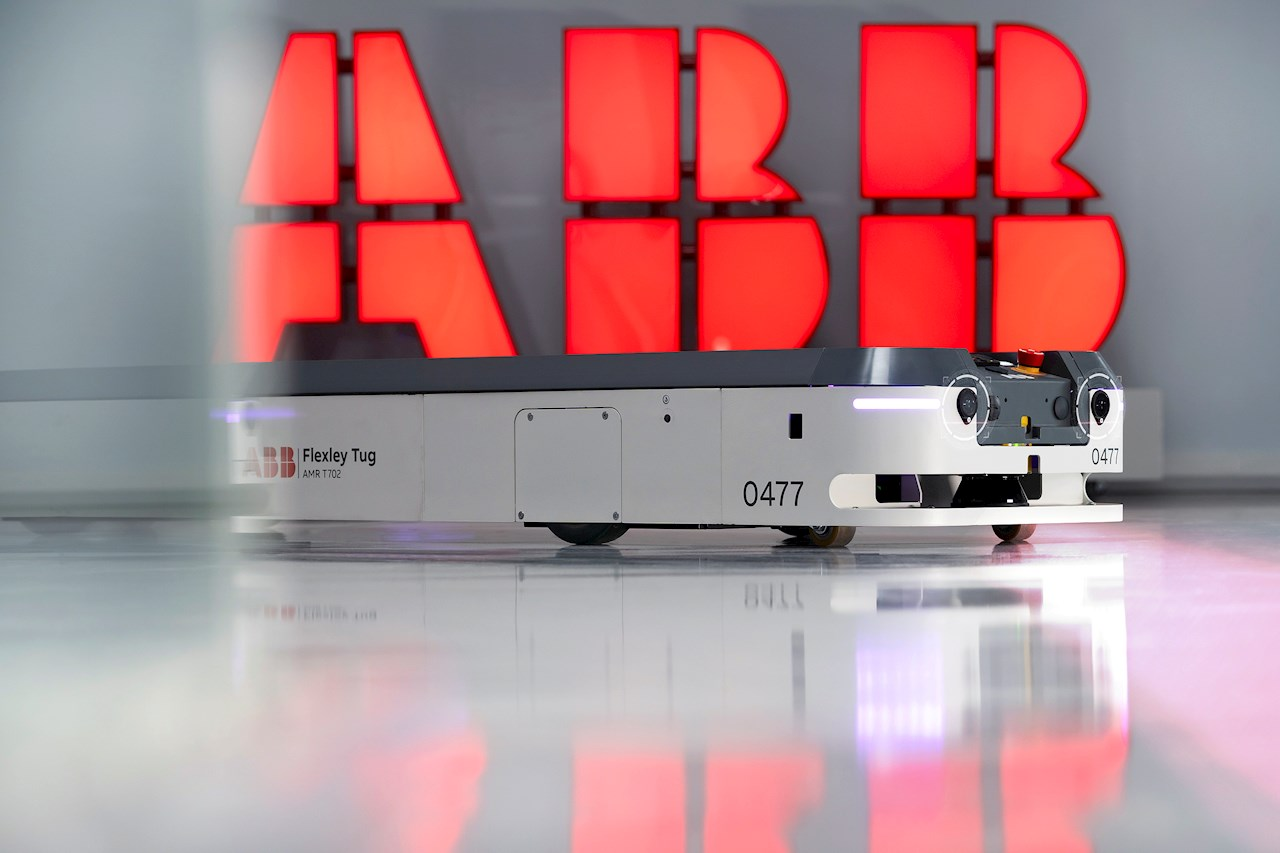
ABB, a global titan in robotics and automation, has taken a decisive step by bringing Sevensense fully into its fold. Sevensense, a spin-off from the prestigious ETH Zurich, has established itself as a leader in AI-powered 3D vision navigation for Autonomous Mobile Robots (AMRs). Their technology allows AMRs to achieve unprecedented levels of speed, accuracy, and, most importantly, autonomy.
The true genius of Sevensense's approach, as highlighted by Sami Atiya, President of ABB Robotics and Discrete Automation, lies in its collaborative intelligence. "Each mobile robot, equipped with vision and AI, scans a unique part of the building; collectively these robots complement each other’s view to form a complete map, enabling them to work autonomously in a rapidly changing environment." This statement is crucial. It signifies a shift from pre-programmed, static pathways to dynamic, self-optimizing systems where machines perceive, learn, and adapt in real-time. This capability is no longer a luxury; it is becoming a critical necessity for industries grappling with skilled labor shortages and volatile market demands.
While ABB's acquisition focuses on the "mobility" aspect of robotics through AMRs, its implications ripple directly into our domain at Taofa: industrial control. An AMR is not an island. Its ability to navigate intelligently is only as valuable as its ability to communicate and integrate seamlessly with the broader production system—the conveyor belts, the assembly stations, the packaging lines, all orchestrated by the central nervous system of the factory: the PLCs and automation controllers.
This is where our role becomes pivotal. The advanced navigation data processed by a Sevensense-powered AMR—its location, the status of its payload, its intended destination—must be instantaneously translated into actionable commands for other machines. Imagine a scenario in an automotive component warehouse:
1. An AMR, using its AI vision, identifies a bin of specific parts and picks it up.
2. It then navigates dynamically around obstacles—people, pallets, other robots—to deliver the bin to a designated workstation.
3. Upon arrival, it doesn't just stop. It sends a precise signal to our Taofa PLC controlling the workstation.
4. Our PLC, having received this signal, triggers the subsequent process—perhaps activating a robotic arm for assembly or updating the Manufacturing Execution System (MES) to log the completion of a task.
This seamless handshake between the mobile robot's intelligence and the stationary control system's reliability is what creates a truly "smart" factory. The AMR provides the flexibility and perception; our controllers provide the stability, logic, and execution. ABB's integration of Visual SLAM technology creates a demand for higher-level, more intelligent controllers that can process complex data and make decentralized decisions. This aligns perfectly with our continuous investment in developing next-generation PLCs and controllers that offer greater processing power, enhanced connectivity (like OPC UA, MQTT), and the ability to handle complex algorithms.
The success of pilot projects in the automotive and logistics sectors, as mentioned by ABB, is just the beginning. The combined force of ABB's robust AMR hardware and Sevensense's AI navigation presents transformative potential across all manufacturing verticals we serve at Taofa.
● In Electronics Manufacturing: Fleets of AMRs can deliver sensitive components to SMT lines with pinpoint accuracy, synchronized by our controllers to ensure just-in-time material flow without a single second of line stoppage.
● In Pharmaceutical and Food & Beverage: Where traceability and cleanliness are paramount, AMRs can handle materials in sterile environments, while our equipment logs every movement and environmental condition, ensuring full compliance.
● In Warehousing and Logistics: The dynamic mapping capability means warehouse layouts can be reconfigured on the fly without needing to reprogram the entire robot fleet, a task managed and optimized by the central control system we provide.
This acquisition, following ABB's earlier purchase of ASTI Mobile Robotics, underscores a sustained commitment to dominating the AMR landscape. For us at Taofa, it serves as a critical roadmap. It tells us that the future of industrial control is contextual, distributed, and AI-augmented.
At Shenzhen Taofa Electronic Technology Co., Ltd., we are not mere observers of this technological revolution; we are active participants and enablers. The evolution of AMRs powered by companies like ABB and Sevensense directly influences the capabilities we build into our products. We are committed to ensuring that our automation controllers, PLCs, and industrial devices are not just compatible with these advanced systems, but are designed to enhance them.
We will continue to leverage insights from such landmark industry developments to refine our offerings, ensuring that our clients are always equipped with control solutions that are future-proof, interoperable, and powerful. Our goal is to be the bridge that connects intelligent mobility with reliable control, helping you build a workplace where AI-enabled robots and automated systems assist your workforce, driving productivity, flexibility, and resilience to new heights.
The future of industry is autonomous, adaptive, and intelligently controlled. Together, with our clients and technology leaders, we are building it.
Shenzhen Taofa Electronic Technology Co., Ltd. is a leading provider of industrial automation solutions based in China's technology hub, Shenzhen. We specialize in the research, development, and manufacturing of high-performance industrial automation controllers, PLCs, and a wide range of automated industrial equipment. Our products are engineered for reliability, precision, and seamless integration, serving a diverse global clientele across manufacturing, logistics, energy, and beyond. We are dedicated to empowering businesses with the intelligent control technology needed to thrive in the era of Industry 4.0 and beyond.

 EN
EN


 Hot News